
Blog
Coffee and health
How much wellbeing is hidden in a cup?
The science of Health,
the art of coffee
It's not just a source of Pleasure.
In those who consume it, it can also have positive influences with Beneficial effects for the mind and body.
CAFFEINE
Features
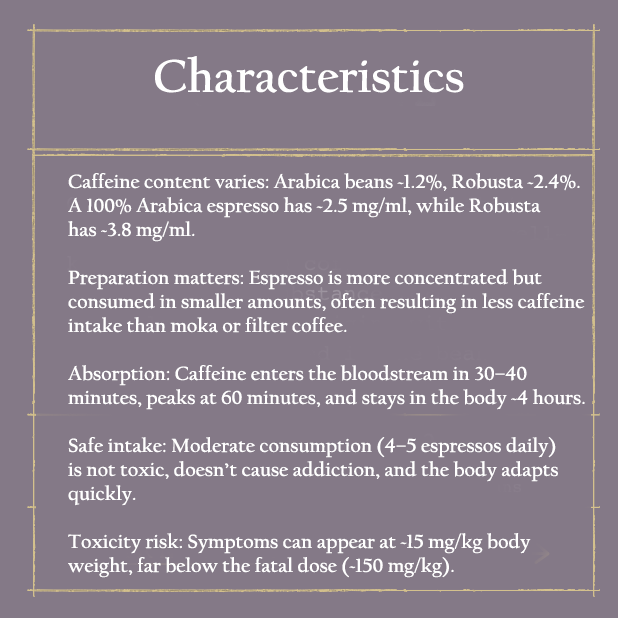
Its amount in a coffee depends on many different factors: green Arabica beans contain around 1.2% caffeine, while Robusta beans contain around 2.4%. The type of mixture definitely influences the amount of caffeine introduced into your body. In a 100% Arabica espresso we can find about 2.5 mgml of caffeine, while in a hypothetical 100% Robusta coffee around 3.8 mgml.
The preparation of coffee also affects the amount of caffeine: espresso coffee, compared to moka or filter coffee, is thicker and concentrated, but is taken in smaller quantities, therefore the caffeine content introduced is often lower than the other preparations.
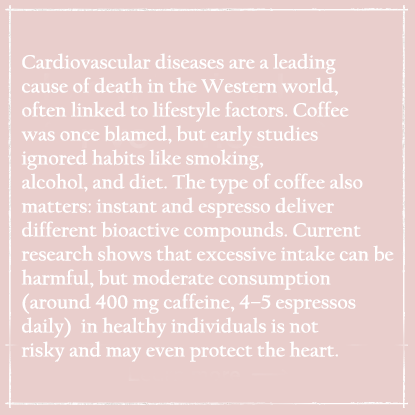
Once ingested, caffeine enters the bloodstream in 30-40 minutes, peaking in 60 minutes. In an adult male, the average residence time in the body is about 4 hours. Moderate daily doses of caffeine (about 4/5 cups of espresso) do not cause any toxic effect and even allow you to take advantage of the positive action of caffeine, which does not induce addiction. The body gets used to its action very quickly, does not need an increase in the dose and at the same time it rapidly lets go its effects.
Symptoms related to coffee toxicity may occur at levels far below fatal doses (150mg/kg body weight). For example, concentrations above 15 mg caffeine/kg body weight may be toxic to the cardiovascular, nervous, and gastrointestinal systems.
ANTIOXIDANTS
Features
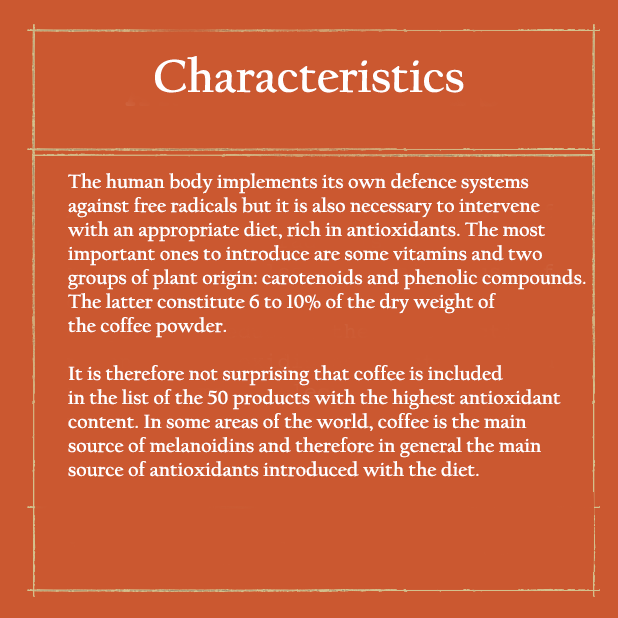
The human body implements its own defence systems against free radicals but it is also necessary to intervene with an appropriate diet, rich in antioxidants. The most important ones to introduce are some vitamins and two groups of plant origin: carotenoids and phenolic compounds. The latter constitute 6 to 10% of the dry weight of the coffee powder.
It is therefore not surprising that coffee is included in the list of the 50 products with the highest antioxidant content. In some areas of the world, coffee is the main source of melanoidins and therefore in general the main source of antioxidants introduced with the diet.

Ode to decaf coffee.
Tasty and Caffeine-free
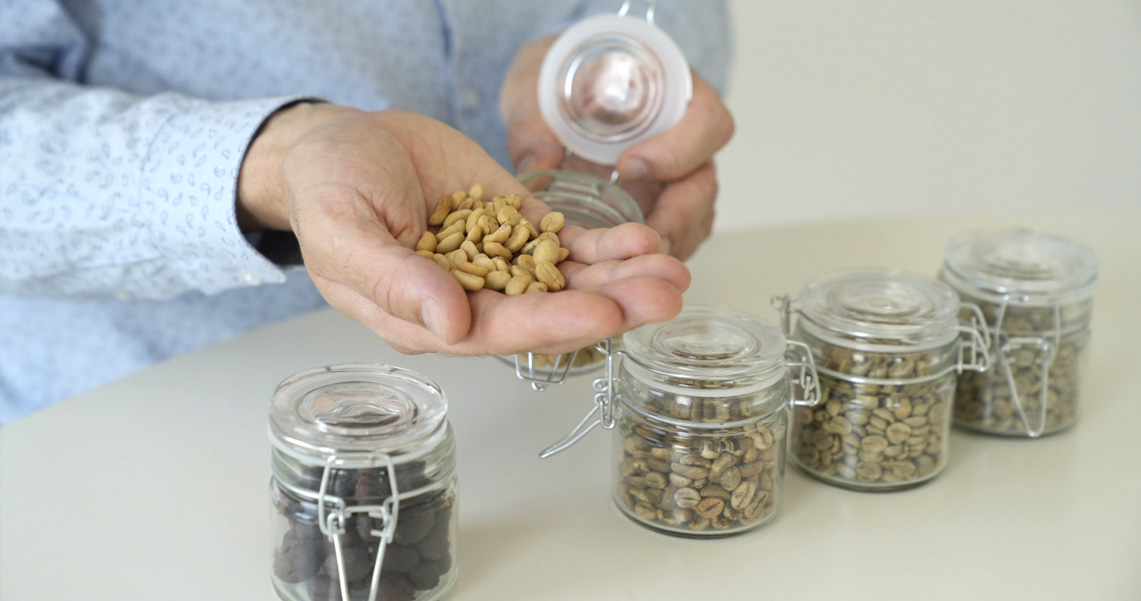
There are several decaffeination techniques: Hausbrandt relies on industry leaders in Italy for its coffee, who use a solvent that is a gas in the atmosphere for decaffeination, but when high temperatures and pressures are applied, it becomes a liquid with a high affinity for caffeine, extracting it almost completely from green coffee beans.
Once decaffeinated the solvent is completely removed and the coffee is roasted and ground like any other. If the process is carried out correctly, the differences with a standard coffee are minimal but you have a caffeine content that is close to zero.
Furthermore, decaffeination leads to a negligible decrease in the antioxidant content. Even those who cannot tolerate caffeine can still turn to decaffeinated coffee as an excellent source of antioxidants.

Does coffee increase cholesterol levels?
There is no connection between coffee consumption and an increase in bad cholesterol in the blood (LDL cholesterol).